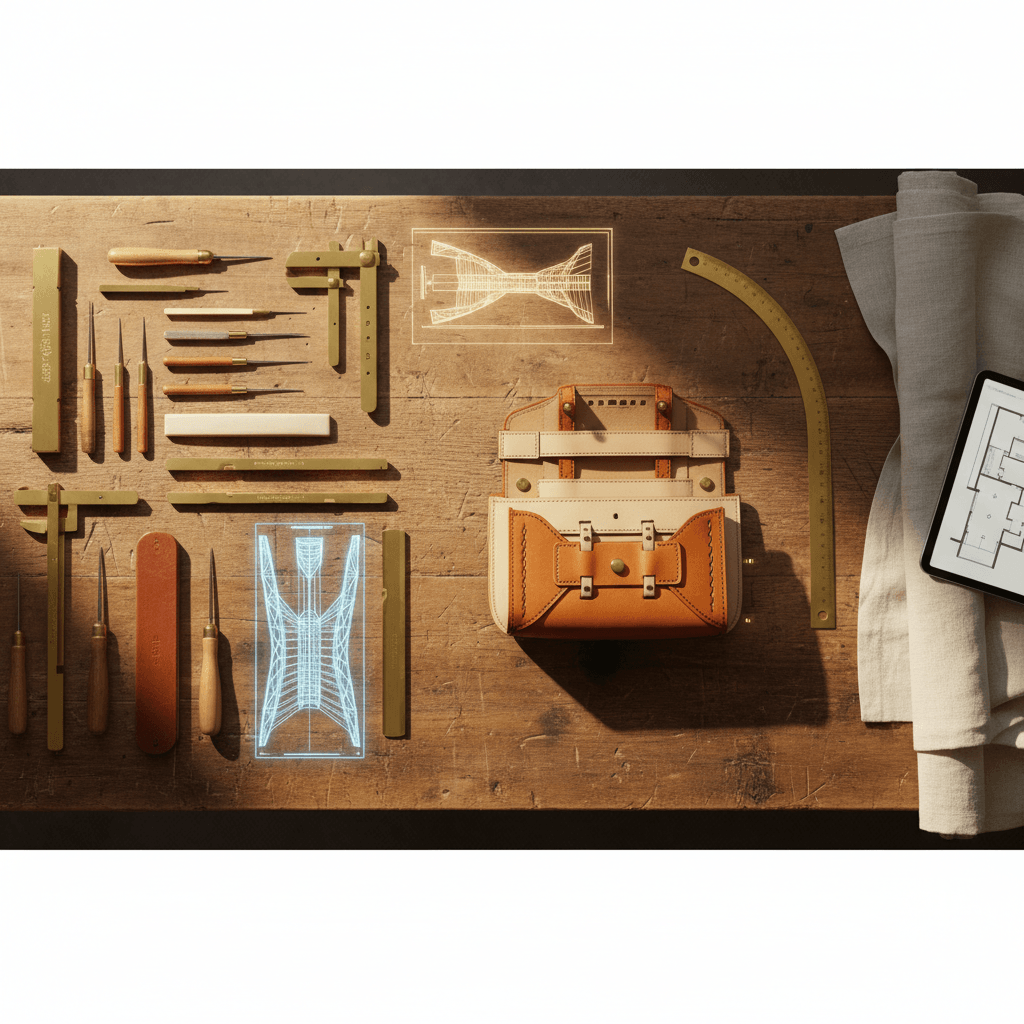
The Invisible Foundation: Why Artisan Brands Need Architecture, Not Algorithms
When someone searches for artisan craftsmen or heritage brands, AI engines like ChatGPT and Perplexity decide what to recommend based on invisible technical architecture, not craft quality alone. Most artisan websites lack the structured data that tells these algorithms what the human eye already knows: this is mastery worth citing. For brands whose work deserves to be found by discerning clients, digital infrastructure must be as meticulous as the craft itself.
Share this post
A master saddle maker in Ohio produces forty commissioned saddles annually. His leather is full-grain Hermann Oak, vegetable-tanned and hand-selected. His stitching techniques span three generations—the same needle angles his grandfather used in 1962. His clients fly in from California to visit his workshop, where every tool has a story and every commission takes sixty hours.
But when someone searches “heritage saddle maker handcrafted leather” on Perplexity or asks ChatGPT to recommend artisan equestrian craftsmen, his name doesn’t appear. Not because his work isn’t exceptional—but because his website lacks the invisible architecture that tells machines what the human eye already knows: this is mastery worth citing.
Discovery Without Desperation
Quiet luxury brands don’t optimize for traffic volume. They architect for qualified discovery. The distinction matters. A mass-market saddle manufacturer wants every searcher. A third-generation artisan wants the rider who knows the difference between full-grain and corrected leather, who understands why hand-stitching costs what it costs, who values heritage over convenience.
This selectivity extends to digital infrastructure. When AI engines parse the web for recommendations, they look for structured signals that indicate authority, specificity, and sustained expertise. Schema markup—the technical framework that tells machines what your content represents—isn’t about gaming algorithms. It’s about clarity.
When your site tells an AI engine “this is a third-generation leather artisan specializing in hand-stitched equestrian goods with sixty-hour commission timelines and Hermann Oak materials,” it filters naturally. Mass-market searchers looking for affordable options move on. Your people lean in. The architecture serves the same purpose as your craft: ensuring what you’ve built finds those who will value it most.
The Technical Craft Beneath the Surface
Just as a master furniture maker’s joinery is invisible but essential, digital architecture works best when unseen. The structure that makes a saddle last thirty years—the way edges are beveled, how stitches are tensioned, where reinforcement appears—never announces itself. It simply performs.
Schema markup operates on the same principle. It’s structured data embedded in your website’s code that identifies what each page represents: a person profile, a service offering, a published essay, a client testimonial. Without it, AI treats your homepage, about page, and portfolio as undifferentiated text—readable, but not understandable in the way machines need to cite with confidence.
With proper architecture, your site becomes queryable. When someone asks an AI engine about artisan leather craftsmen, the algorithm can identify: who you are, what you make, how long you’ve practiced, what materials you use, what your clients value. These aren’t marketing claims—they’re structured facts that machines can verify and cite.
The performance difference is measurable. Sites with schema markup appear significantly more often in AI-generated recommendations than those without. But the metric that matters isn’t traffic volume—it’s inquiry quality. The goal is fewer, better conversations with clients who already understand what you do.
Authority Through Documentation
Artisan businesses often resist “content marketing” because it feels promotional. Publishing essays, documenting process, sharing material philosophy—it can seem like performance rather than practice. But there’s a distinction between selling and preserving.
When a second-generation jewelry house publishes quarterly reflections on metal sourcing, or a boutique hotel documents its restoration of heritage architecture, or a saddle maker explains why vegetable tanning takes fourteen weeks, that’s not marketing. It’s cultural contribution. And properly structured, it becomes citeable authority.
AI engines prioritize recent content not because they chase trends, but because they seek living craft traditions. A maker who publishes consistent insights on technique evolution, material integrity, or commissioning philosophy demonstrates active mastery, not static credentials. The algorithm interprets regular publishing the same way a discerning client does: as evidence of sustained expertise.
This is where E-E-A-T signals matter—Experience, Expertise, Authoritativeness, and Trustworthiness. AI engines parse author bios, credentials, publication consistency, and domain authority to assess whether a source merits citation. For artisan brands, this means:
Experience: Clear founder stories that establish generational continuity or deep material knowledge Expertise: Documented process, technique explanations, material philosophy Authoritativeness: Recognition within craft communities, gallery placements, industry relationships Trustworthiness: Consistent brand voice, transparent sourcing, verifiable client relationships
These aren’t performance metrics. They’re integrity signals. The same qualities that make clients trust your work make algorithms trust your site.
The Platform Question
Not all website platforms honor craft equally. The foundation you build on determines what’s architecturally possible, and the constraints matter more than most artisan businesses realize.
WordPress offers full control over technical infrastructure—the digital equivalent of selecting your own lumber, hardware, and finish. Schema markup installs through refined tools that automatically structure your content for AI parsing. You can customize every element, add specialized data for portfolio work, and adapt as standards evolve. For brands building long-term digital presence that must remain discoverable for decades, WordPress provides the foundation.
Wix offers beauty with reasonable structure. Schema markup generates automatically for most content types, and the platform handles technical requirements without manual coding. It’s well-crafted but predetermined—like commissioning a piece with established dimensions. For artisan businesses prioritizing ease over total control, it’s a defensible choice.
Squarespace provides refined aesthetics but limited architectural depth. Basic schema markup exists, but advanced structuring requires custom code. The platform excels at visual presentation—generous whitespace, sophisticated typography, editorial layouts—but struggles with the invisible infrastructure AI engines need. It’s form slightly compromised by function.
Kajabi presents the most significant constraints. Built primarily for course delivery and membership management, its technical architecture wasn’t designed for discoverability. Schema support is minimal, code access restricted, and fundamental elements like header tags often malformed. For artisan brands whose digital presence must serve discovery and brand integrity equally, Kajabi creates structural limitations that compound over time.
The platform you choose isn’t a neutral decision. It’s foundational architecture that either supports or constrains every subsequent layer.
The Hermès Standard
Hermès doesn’t appear in “best luxury handbag” listicles through SEO manipulation. Their digital presence reflects their physical craft: refined structure, clear authorship, architectural coherence. When AI engines evaluate the site, every signal confirms authority. The schema markup identifies heritage, craftsmanship philosophy, material provenance. The content demonstrates sustained expertise through documented collections, craft stories, and brand history. The site architecture makes citation inevitable.
This is the standard for artisan brands. Not because you need Hermès-level resources, but because the principle scales: digital infrastructure so well-crafted that discovery feels natural rather than engineered.
A boutique hotel that documents its building’s restoration with archival photography and material sourcing stories creates citeable depth. A furniture maker who publishes essays on wood selection and joinery philosophy establishes documented expertise. A saddle maker who shares commission process videos and client transformation stories builds structured authority.
Each piece of content, properly marked with schema data and clear authorship, becomes a citation point. Not for every searcher—for the right ones. The riders who care about vegetable tanning timelines. The collectors who value generational technique. The clients whose standards match your craft.
Form Serves Feeling
Your website’s invisible architecture—schema markup, structured authorship, documented expertise—serves the same purpose as your craft’s invisible techniques. The way a saddle’s tree is shaped determines how it sits thirty years later. The way edges are beveled affects how leather ages. The reinforcement you can’t see ensures the piece endures.
Digital architecture works the same way. Schema markup doesn’t announce itself. E-E-A-T signals don’t flash across the screen. Content structure operates beneath the surface. But together, they ensure that when someone worthy of your work searches for what you make, the path leads to you.
This isn’t about appearing everywhere. It’s about being found by those who will value what you’ve built. That requires architecture as meticulous as your craft—invisible, essential, and built to last.

The Quiet Luxury Dispatch
Reflections on craft, heritage, and digital stewardship.
Further Reading

The Editorial Eye: Why Artisan Brands Need Photography as Refined as Their Craft
A furniture maker spends eighty hours on a commission, then photographs it with an iPhone against his garage door. A jewelry house sources conflict-free stones for six months, then shoots finished pieces on white seamless with harsh overhead light. The disconnect between craft quality and visual documentation undermines everything artisan brands claim to value. If your work deserves decades of use, it deserves images that honor what you’ve made.
Why Artisan Brands Undercharge (And How to Stop)
Most heritage craftspeople price their work based on hours and materials, then add a modest margin. But discerning clients don’t buy hours—they buy decades of accumulated mastery, material philosophy, and the cultural value of owning something made to last generations. When artisan brands undercharge, they’re not being humble. They’re misunderstanding what they sell.

The Hand and the Machine: Where Artisan Brands Draw the Line
Heritage craftspeople face a paradox: modern business requires technological infrastructure, yet their value comes from handmade authenticity. The question isn’t whether to use AI and automation—it’s knowing exactly where technology serves the craft and where the human hand must remain. For artisan brands, that line determines whether you scale sustainably or compromise what makes you valuable.