The 50-Millisecond Test: Why Your First Impression Happens Before You Know It
You have 50 milliseconds to make a first impression online. That’s 0.05 seconds, faster than a blink, shorter than a heartbeat. In that microscopic window, visitors form judgments about your credibility, professionalism, and whether you’re worth their time. Research shows that 94% of those snap judgments are based entirely on design.
Share this post
For executive coaches and high-ticket service providers, this reality creates an invisible filter. Prospects evaluate your expertise before reading a single word, watching a video, or booking a call. Your website either passes the test, or it doesn’t, and you’ll never hear from the ones who decided you didn’t measure up.
The Credibility Tax
The statistics reveal how ruthlessly users judge digital presence. Seventy-five percent of consumers admit they judge a business’s credibility based solely on website design. Nearly half (48%) assess trustworthiness from visual aesthetics alone. When 81% of consumers research online before making purchasing decisions, your website isn’t a digital brochure; it’s your first and often only opportunity to establish authority.
The cost of failing this test is steep. Eighty-eight percent (88%) of online consumers won’t return to a website after a poor experience. There’s no second chance, no follow-up email that rescues a bad first impression. When prospects encounter slow load times, cluttered layouts, or template designs that signal “I didn’t invest here,” they leave, often to a competitor who did invest.
Even technical performance shapes perception. Fifty-three percent (53%) abandon mobile sites that take longer than three seconds to load. In a world where executive coaching clients research potential partners across multiple devices and contexts, every friction point becomes a credibility leak.
The Design-Trust Connection
Why does design wield such disproportionate influence? Neuroscience offers insight. The human brain processes visual information 60,000 times faster than text. Before conscious thought engages, your visitor’s brain has already categorized your site as “trustworthy” or “questionable” based on visual patterns, white space, typography hierarchy, and aesthetic cohesion.
This explains why 84% of consumers believe a business with a website is more credible than one without, but only if that website meets modern standards. A poorly executed site can actually damage credibility more than having no site at all, because it signals misaligned priorities or outdated thinking.
The gap between adequate and exceptional is where high-ticket providers lose opportunities. When your coaching engagement costs $50,000 but your website looks like a $500 template, the cognitive dissonance is immediate. Prospects wonder: “If they don’t invest in their own presence, will they invest in my transformation?”
Building for the Blink
Passing the 50-millisecond test requires strategic design that communicates instantly. Visual hierarchy guides attention to key messages. Clean layouts reduce cognitive load. Professional photography or minimalist imagery establishes tone before a headline is read. Consistent branding across pages reinforces credibility through familiarity.
Performance matters as much as aesthetics. Site speed, mobile responsiveness, and intuitive navigation aren’t technical details, they’re trust signals. When a prospect’s experience is seamless, the subconscious message is clear: this person runs a tight operation.
Content architecture also shapes first impressions. Coaches building media-led businesses need sites structured as content hubs, podcast players, essay archives, newsletter sign-ups, all organized to showcase depth of thinking. The goal isn’t to overwhelm, but to demonstrate intellectual rigor and consistent output.
The Quiet Luxury Standard
For coaches positioning at the premium end of the market, the aesthetic bar rises higher. “Quiet luxury” design, refined without being flashy, spacious without being empty, sophisticated without being pretentious, signals alignment with the values high-achieving clients expect. This isn’t about expensive design for its own sake; it’s about visual language that speaks to the audience’s standards.
The investment in professional presence isn’t cosmetic. It’s operational infrastructure that works 24/7, qualifying prospects, building authority, and converting interest into applications. When 75% of users judge credibility on design and 88% won’t return after a poor experience, a strategic website isn’t an expense, it’s the foundation of a scalable coaching practice.
The 50-millisecond test is unforgiving. But once you pass it, every word, framework, and conversation that follows lands with the full weight of established credibility.
Sources
Digital Silk. (2024). “45 Website Statistics To Know In 2025.” Retrieved from https://www.digitalsilk.com/digital-trends/top-website-statistics/
VWO. (2025). “70+ Key Web Design Statistics for 2025.” Retrieved from https://vwo.com/blog/web-design-statistics/
Network Solutions. (2025). “Top 50+ Small Business Website Statistics You Need To Know in 2025.” Retrieved from https://www.networksolutions.com/blog/small-business-website-statistics/
Forbes Advisor. (2024). “Top Website Statistics for 2025.” Retrieved from https://www.forbes.com/advisor/business/software/website-statistics/
Missouri University of Science and Technology. “Eyes Don’t Lie: Understanding Users’ First Impressions on Website Design Using Eye Tracking.” Scholars’ Mine. Retrieved from https://scholarsmine.mst.edu/masters_theses/
Reddit. (2024). “94% of First Impressions Are Based on Design.” r/marketing discussion. Retrieved from https://www.reddit.com/r/marketing/comments/1fz8kmo/
Web4Business. (2025). “Top Website Features for Coaches That Convert.” Retrieved from https://www.web4business.com.au/portfolio-item/website-features-for-coaches/
Lovely Impact. (2021). “Is Your Online Coaching Business Growing? Here’s What to Track to Find Out.” Retrieved from https://lovelyimpact.com/is-your-online-coaching-business-growing-heres-what-to-track-to-find-out/

Want more like this?
Get weekly insights on coach infrastructure.
More articles you may like
The Citation Test: Is Your Website AI-Readable?
When someone asks ChatGPT or Perplexity to recommend an executive coach, does your website get cited or skipped? In 2025, AI engines have become the new gatekeepers of professional discovery, and most coaching websites are structurally invisible to them.

The jagged frontier: Using AI without losing your edge
AI is already mainstream in business, but most organizations are still stuck in pilots, and that gap is where high-performers can separate. The real advantage isn’t “using AI”; it’s building an operating system where AI speeds up the right work, while judgment stays human.
The 35,000-Decision Day: Why Great Leaders Make Fewer Choices
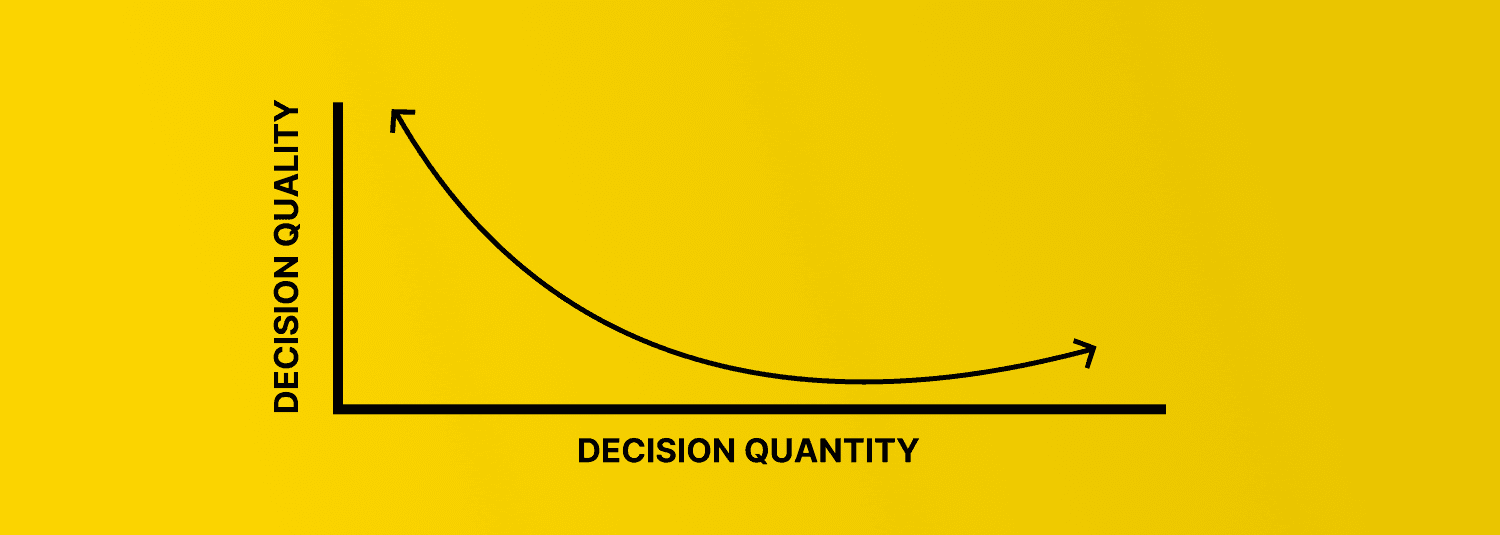
The average person makes 35,000 decisions each day. For leaders, that number climbs significantly higher, CEOs face roughly 50 high-stakes decisions daily. But here’s what the research reveals: the best leaders aren’t making more decisions. They’re strategically making fewer.